
Introduction to Boolean Algebra
Learn the fundamentals of Boolean Algebra, basic operators, and truth values.
Beginner
20 min
This lesson introduces the foundations of Boolean Algebra — a fundamental tool in logic, mathematics, and computer science. We’ll explore what Boolean Algebra is, its origins, and why it’s crucial for understanding how computers and digital systems work. By the end of this lesson, you’ll have a clear grasp of what Boolean Algebra is and how it differs from regular algebra, setting the stage for more advanced topics ahead.
What is Boolean Algebra?
Have you ever wondered how computers “think”? While they may seem incredibly complex, at their core, they rely on something surprisingly simple: logic. Boolean Algebra is the language of logic — a system that allows us to express true or false values and combine them in meaningful ways. Whether you’re designing a computer chip or building a smart home system, boolean algebra is the backbone of modern digital technology. In this first lesson, we’ll strip things down to the basics and explore how logic forms the foundation of everything from simple switches to complex algorithms.
Boolean Algebra is a branch of mathematics that deals with variables that have only two possible values: true and false (often represented as 1 and 0, respectively). Unlike traditional algebra, where variables can take on a wide range of numbers, Boolean variables are binary — they’re either on or off, yes or no. This binary nature makes Boolean Algebra an ideal framework for reasoning about digital circuits, where each wire or gate is either conducting electricity (1) or not (0).
At its core, Boolean Algebra uses a set of operations — most commonly AND, OR, and NOT — to manipulate these binary values. These operations follow strict rules and allow us to build expressions that can represent complex logical relationships. For example, in a security system, the alarm might only sound if the door is open AND the motion sensor is triggered. Boolean Algebra gives us the tools to describe and analyze such scenarios precisely.
History of Boolean Algebra
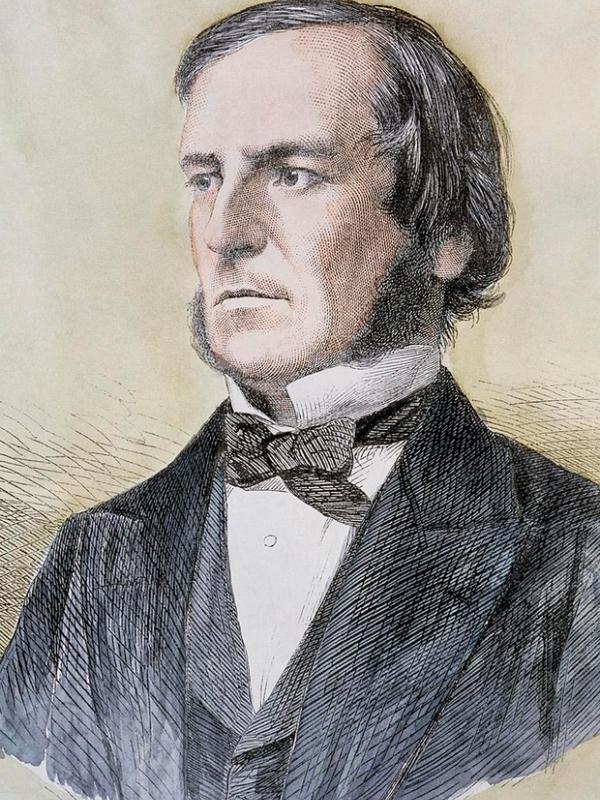
The story of Boolean Algebra begins in the mid-19th century with George Boole, an English mathematician and philosopher. In 1854, Boole published “An Investigation of the Laws of Thought”, a work that laid the foundations for what we now call Boolean Algebra. Boole was not working with computers — they didn’t exist yet — but he was fascinated by how human reasoning could be captured mathematically. His revolutionary idea was that logical propositions could be treated like algebraic equations, where variables could represent true or false values rather than numbers.
For decades, Boolean Algebra remained mostly a mathematical curiosity. It wasn’t until the 1930s and 1940s that its full potential was realized. The American engineer Claude Shannon, often called the “father of information theory,” showed how Boolean logic could be applied to design electrical circuits. His 1937 master’s thesis demonstrated how logic gates could be used to perform complex operations using just binary inputs — a turning point that connected Boolean logic with physical systems. Shannon’s insight marked the birth of digital circuit design, which underpins everything from calculators to supercomputers.
Today, Boolean Algebra is essential in computer science, electrical engineering, and digital electronics. It’s used to design CPUs, write algorithms, build search engines, and even structure databases. For example, when you search online using keywords like “apples AND oranges” or “cats OR dogs,” you’re using boolean logic. From the logic chips in your phone to AI decision-making, the legacy of George Boole’s ideas continues to shape our world in profound ways.
Basic Concepts
At the heart of Boolean Algebra is the idea that every statement can be either true or false — nothing in between. This binary logic reflects how digital systems operate: everything is reduced to 1s and 0s, on or off, yes or no. This simplicity might seem limiting at first, but it turns out to be incredibly powerful for representing and manipulating logical operations in computing and electronics.
Boolean Variables
A Boolean variable is a symbol (like A, B, or X) that can take one of two values: 1 (true) or 0 (false). For instance, if we define A = 1, we are saying that A is true. If B = 0, B is false. These variables can be combined using Boolean operators to form logical expressions — the building blocks of more complex systems.
Boolean Operators
Operators are symbols or keywords used to perform operations on Boolean variables. Think of them as tools that let us build logic — combining or modifying true/false values to produce new results. In Boolean Algebra, the three most fundamental operators are:
-
AND ( ∧ ) – Only returns true if both inputs are true.
Example:1 AND 1 = 1,1 AND 0 = 0 -
OR ( ∨ ) – Returns true if at least one input is true.
Example:0 OR 1 = 1,1 OR 1 = 1 -
NOT ( ¬ ) – Inverts the value (true becomes false, and vice versa).
Example:NOT 1 = 0,NOT 0 = 1
These operations can be visualized using truth tables, which list all possible combinations of inputs and their resulting outputs. You’ll learn more about them in the next lesson, but here’s a quick example for the AND operation:
| A | B | A AND B |
|---|---|---|
| 0 | 0 | 0 |
| 0 | 1 | 0 |
| 1 | 0 | 0 |
| 1 | 1 | 1 |
Each row shows a possible combination of input values and the result of applying the AND operation. This kind of table helps us understand and predict the behavior of logic expressions and digital circuits.
Expressions and Evaluation
Just like in regular algebra, you can build boolean expressions using multiple variables and operations. For example:
X = (A AND B) OR (NOT C)
To evaluate this, you’d substitute the values of A, B, and C, and apply the operations step by step. Boolean expressions like this are essential in programming conditions, electronic switches, and even AI decision-making systems.
Applications of Boolean Algebra
Boolean Algebra might seem abstract at first, but its applications are everywhere — often hidden beneath the surface of the devices and systems we use every day. From the smallest calculator to the most complex artificial intelligence models, boolean logic plays a vital role in enabling decision-making, control, and data processing.
Digital Electronics and Circuit Design
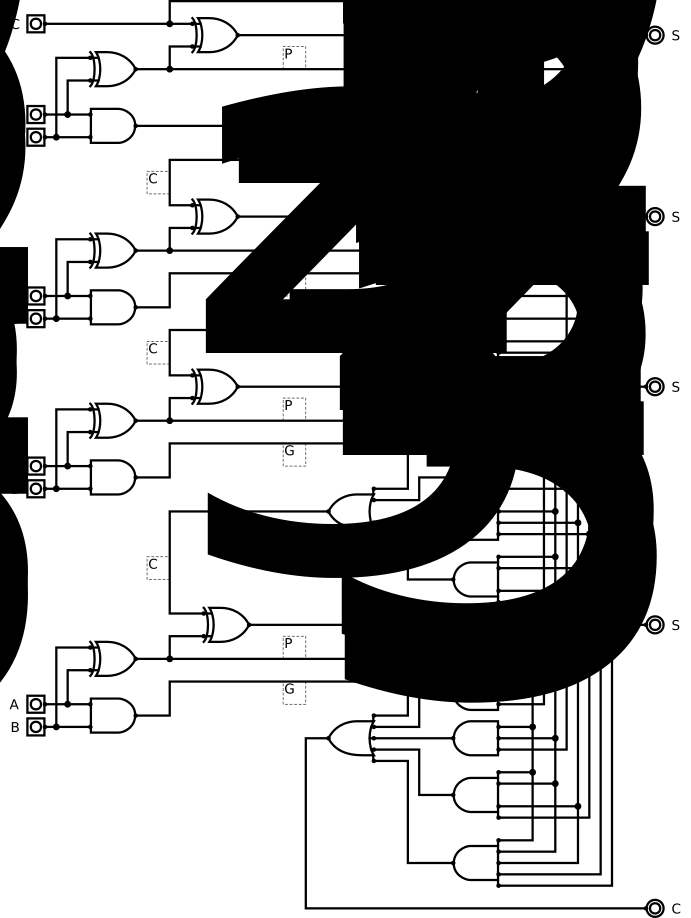
The most direct and widespread application of Boolean Algebra is in digital electronics. Every digital device — computers, smartphones, traffic lights, even your microwave — relies on logic circuits built from basic components called logic gates. These gates (AND, OR, NOT, etc.) implement the very operations you’ve been learning about. Designers use Boolean expressions to specify how signals flow through a system and how devices should respond to different inputs.
For example, suppose we want a light to turn on only when two sensors are activated. This behavior can be described by a
boolean expression: Light = Sensor1 AND Sensor2. Engineers use this kind of expression to design circuits that do exactly
what’s required — efficiently and reliably.
Programming and Software Logic
Boolean logic also forms the backbone of programming. Whenever a developer writes an if statement, uses comparison
operators (==, !=, <, etc.), or creates a condition like if (isLoggedIn AND hasPermission), they’re applying
boolean principles. Modern programming languages treat boolean values (true, false) as a core data type, allowing
logic-based decision-making in everything from web apps to robotics.
Even search engines use Boolean logic. When you type ("climate change" AND policy) OR ("global warming" AND law),
you’re performing a logical query that combines boolean expressions to narrow or broaden results. Behind the scenes,
your search is being filtered through logic gates and algorithms grounded in boolean algebra.
Data Processing and AI
In more advanced applications like artificial intelligence, machine learning, and database queries, boolean algebra is often used to construct rules, filters, and decision trees. For example, a spam filter might block emails that satisfy the condition:
(Contains("free") AND Contains("money")) AND NOT (FromTrustedSource)
This is essentially a boolean expression applied to textual data, helping the system decide whether to flag or allow an email. In AI, such logical rules are often combined with probabilities, but boolean logic remains a foundational layer of reasoning systems.
Real-World Example: Smart Home System
Let’s say you’re designing a smart home system, and you want the heater to turn on only if someone is home and the temperature is below 20°C. That condition can be expressed in Boolean terms like this:
Heater = IsHome AND (Temperature < 20)
Even though the temperature comparison is numeric, the result of the comparison is boolean (true or false), making it compatible with logical operations. This is exactly how modern automation systems work.
Key Takeaways
- Boolean Algebra is a mathematical system based on binary values: true/false or 1/0.
- It was developed by George Boole in the 19th century and later applied to electronics by Claude Shannon, giving rise to digital circuit design.
- The core components are Boolean variables and Boolean operators: AND, OR, and NOT.
- Boolean expressions can be used to describe logic in electronics, programming, search engines, automation, and AI.
- Understanding Boolean logic is essential for fields like computer science, engineering, and data science.